
Preservatives in Skin and Hair Products: Why They Matter
If you've ever turned a bottle over to read the label, you've probably seen preservatives in the ingredients list, or seen a product proudly labelled "preservative-free". So what do preservatives actually do, and does every product need them? Here's a simple guide.
What preservatives do
Preservatives keep a product safe to use from the first day to the last. Their job is to stop bacteria, yeasts and moulds from growing in it. Without them, these germs can multiply while the product sits on a shelf, or each time you open it and touch it. That can spoil the product and, in some cases, lead to skin or eye infections [1,2].
Water is the main risk
Germs need water to grow. That's why products made with water, such as lotions, creams, shampoos and gels, almost always need a preservative [1,3]. Some products lower the risk in other ways: how they are formulated, packaging that keeps air and fingers out (like pumps or airless bottles), and clean manufacturing [3,6]. Either way, every product needs some kind of protection against germs.
Why oils are different
Products made only from oils, with no added water, give germs very little to live on. Because of this, a well-made oil may not need a traditional preservative at all [3,6].
That doesn't mean oils never change. Germs can still get in during manufacturing or use, and over time air and light can make oils go stale (rancid). Antioxidants, such as vitamin E, slow this down and keep the oil fresh. But antioxidants protect the oil itself, not against germs, so they are not a replacement for a preservative [3,6].
Are preservatives safe?
Preservatives often get a bad reputation, but most of those used in cosmetics have been checked for safety at set amounts [4,5]. How safe one is for you depends on which preservative it is, how much is used, how often you use the product, and your own skin. A small number of people are allergic to certain preservatives and can get an itchy, red rash where the product touches their skin [4]. That doesn't make preservatives harmful as a group. In water-based products, they are what keeps you safe [1,4].
Our approach
Our oils are preservative-free because they are made only from oils, with no added water. But leaving out water is only part of the story. We also rely on careful formulation, clean manufacturing and packaging that protects the oil from air, light and contamination, so every bottle stays safe and fresh from the first drop to the last [5].
Keep your oil fresh
A few simple habits help any oil last longer: close the cap tightly after each use, store it away from direct sunlight and heat, and keep water out of the bottle (so don't leave it open in the shower).
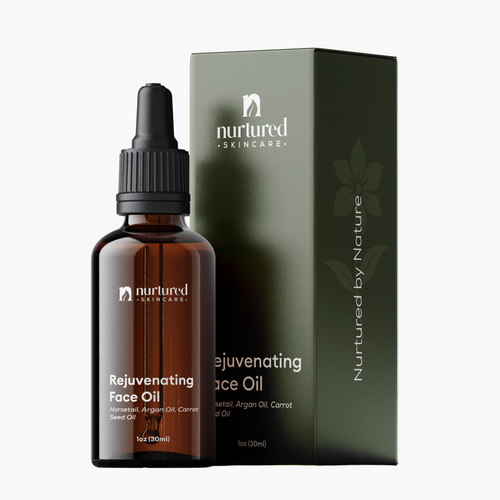
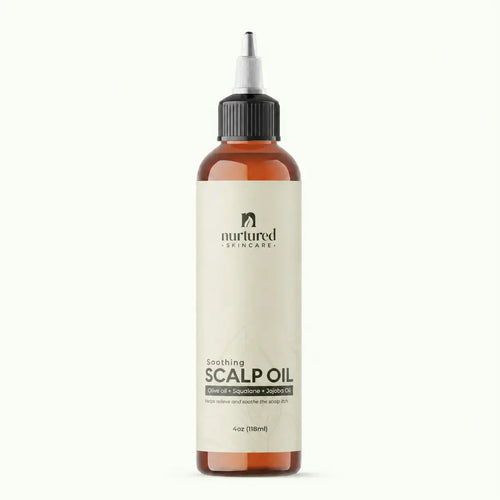
Explore related Nurtured products
References
[1] Center for Food Safety and Applied Nutrition. Microbiological Safety and Cosmetics [Internet]. U.S. Food and Drug Administration. 2019 [cited 2026 Oct 13]. Available from: https://www.fda.gov/cosmetics/potential-contaminants-cosmetics/microbiological-safety-and-cosmetics
[2] Office of the Commissioner. Shelf life and expiration dating of cosmetics [Internet]. U.S. Food and Drug Administration. FDA; 2024 [cited 2026 Oct 13]. Available from: https://www.fda.gov/cosmetics/cosmetics-labeling/shelf-life-and-expiration-dating-cosmetics
[3] Halla N, Fernandes I, Heleno S, Costa P, Boucherit-Otmani Z, Boucherit K, et al. Cosmetics preservation: A review on present strategies. Molecules [Internet]. 2018 June 28 [cited 2026 Oct 13];23(7):1571. Available from: https://www.ncbi.nlm.nih.gov/pmc/articles/PMC6099538/
[4] Lundov MD, Moesby L, Zachariae C, Johansen JD. Contamination versus preservation of cosmetics: A review on legislation, usage, infections, and contact allergy. Contact Dermatitis. 2009 Jan 28;60(2):70–8.
[5] Center for Food Safety and Applied Nutrition. Product testing of cosmetics [Internet]. U.S. Food and Drug Administration. 2019 [cited 2026 Oct 13]. Available from: https://www.fda.gov/cosmetics/cosmetics-science-research/product-testing-cosmetics
[6] Varvaresou A, Papageorgiou S, Tsirivas E, Protopapa E, Kintziou H, Kefala V, et al. Self‐preserving cosmetics. International Journal of Cosmetic Science. 2009 May 11;31(3):163–75.